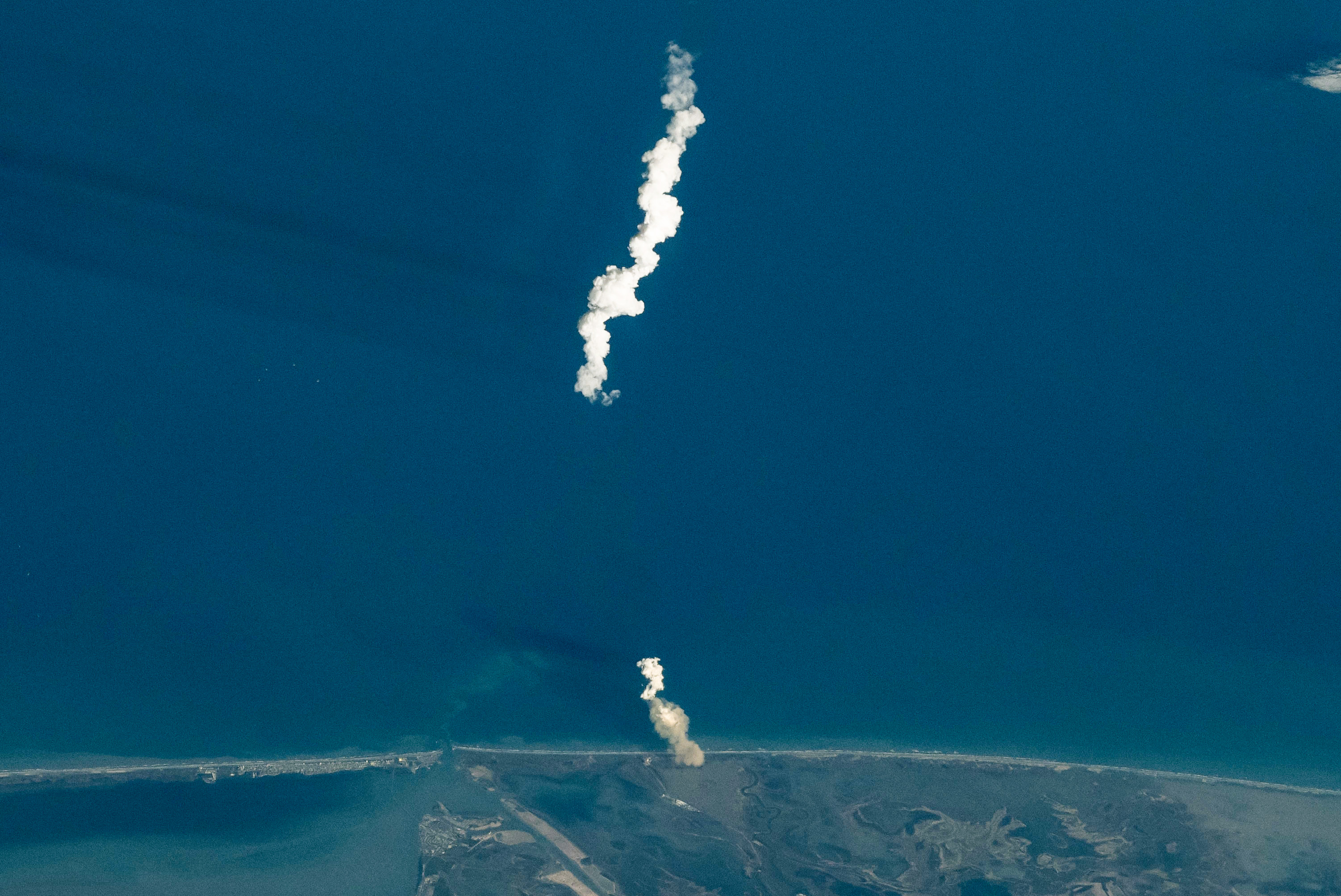
SpaceX opened a 75-minute launch window at 5:15 a.m. PT Monday, Sept. 28, for the first orbital flight of its Starship rocket, the 407-foot vehicle built by the Hawthorne-headquartered company.
Flight 14 marks a turning point. All 13 previous Starship-Super Heavy launches flew intentionally suborbital trajectories. This time, the upper stage is planned to reach orbit and circle Earth roughly six times at about 170 miles altitude. It would then splash down in the Pacific Ocean west of Chile nearly 10 hours after liftoff, Spaceflight Now reported.
It is also the program's first revenue-generating mission. Ship 41, the upper stage, carries 26 Starlink V3 satellites, the first operational units of SpaceX's next-generation internet constellation.
Each satellite adds 1 terabit per second of capacity to the network, according to Spectrum News 13. Three of the 26 carry cameras to scan Starship's heat-shield tiles and beam imagery back to operators.
The Federal Aviation Administration issued the launch license on Saturday, Sept. 26, CNBC reported. The modified license covers orbital-trajectory safety, payload and financial-responsibility requirements that earlier suborbital flights did not need.
SpaceX stacked booster B21 and Ship 41 on Wednesday, Sept. 23, then completed a full wet dress rehearsal on Sept. 24. The company had already run a 60-second static fire of all six Raptor engines on the upper stage.
SpaceX will not attempt to recover either stage on this flight. About 25 minutes after liftoff, one of Ship 41's sea-level Raptor engines is planned to reignite and push the vehicle into a circular orbit.
Satellite deployment is scheduled to begin about 34 minutes after liftoff, with the 26 satellites released in roughly one-minute increments over a half-hour sequence.
"Starship is 2 to 3 years away from hourly flights," CEO Elon Musk said on X on Sunday, Sept. 27.
The launch comes 18 years to the day after SpaceX's Falcon 1 reached orbit for the first time, according to Spaceflight Now. SpaceX, which went public in June 2026 in what CNBC described as the largest initial public offering on record, is now valued at about $2 trillion. Starlink is the company's largest and only profitable business segment.
Backup launch dates are available Sept. 29 and Sept. 30. If Flight 14 succeeds, SpaceX said it may attempt to catch the Starship upper stage on Flight 15.